
Fatigue Behind the Beauty Frame: Kieu Trinh Returns, Anh Thao Cramps in a Long Five-Set Night
ভিয়েতনাম জাতীয় নারী Volleyball চ্যাম্পিয়নশিপ ২০২৬-এর দ্বিতীয় রাউন্ডে ভিন লংয়ে হ্যানয় টাস্কো অটো থং তিনকে ৩-২ ব্যবধানে হারায় (২৫-১৬, ১৪-২৫, ২৩-২৫, ২৯-২৭, ১৫-১১)। ম্যাচটি আড়াই ঘণ্টা স্থায়ী হয়। দীর্ঘ চোটবিরতির পর ফিরে কিয়েউ ট্রিন থং তিনের হয়ে পাঁচ সেটই খেলেন; তাঁর Height ১.৭৭ মিটার এবং তিনি কারিগরি-নির্ভর Opposite। হ্যানয়ের আনথাও ম্যাচ শেষে ক্র্যাম্পে ভোগেন, যা ঘন সূচিতে কর্মভারের সংকেত। হ্যানয়ের আমদানি তারকা সার্বিয়ার সাবেক বিশ্বচ্যাম্পিয়ন ব্রাঙ্কিকা মিহাইলোভিচের ওপর আক্রমণ নির্ভরতা স্পষ্ট। প্রথম রাউন্ড শেষে হ্যানয়ের রেকর্ড ৭ ম্যাচে ৭ জয়, তবে প্রতিপক্ষের মান অনুযায়ী সমন্বয় না থাকায় এটি শক্তির চূড়ান্ত প্রমাণ নয়। প্রতিবেদনে কোনো প্রযুক্তিগত Statistics (স্পাইক, ব্লক, পাস) নেই, তাই কার্যকারিতা-সংক্রান্ত দাবি মতামত হিসেবে বিবেচ্য। প্রধান ঝুঁকি: কিয়েউ ট্রিনের পুনরায় চোট, আনথাওয়ের পেশিজনিত ঝুঁকি এবং হ্যানয়ের একক তারকা-নির্ভর আক্রমণ কাঠামো।
1. The night: five sets, two and a half hours, one oscillation
The opening match of Round 2 of the 2026 Vietnam National Women's Volleyball Championship, played on 14 October at the Vinh Long provincial gymnasium, was never just a result. It was simultaneously the story of one star's return, another star's physical breakdown, and a mirror of a domestic league's limits and ambitions. Hanoi Tasco Auto, unbeaten at the top of the table, met the army team Thong Tin. The five-set battle ended 3-2 to Hanoi: 25-16, 14-25, 23-25, 29-27, 15-11.
The match lasted roughly two and a half hours. That duration is itself the description: not a quick, dominant exhibition, but long rallies, swings, and a test of mental endurance. Anh Thao, one of Hanoi's main attackers, cramping after the match is direct evidence of that prolonged character.
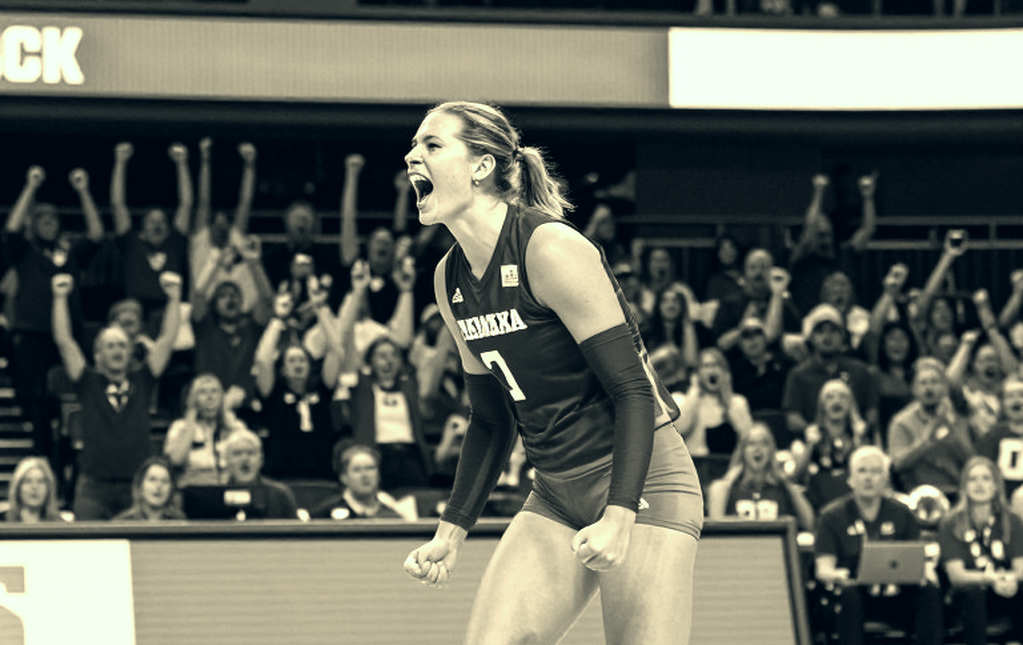
The most discussed element was the return of Thong Tin opposite Hoang Thi Kieu Trinh. Back after a long injury layoff, she played all five sets. The report credits her with diversity in attack, effective blocking support and active defence. But alongside that praise sits an obvious question: how safe is a full five-set load immediately on return?
2. Set one: 25-16, Hanoi in control
Hanoi played close to cleanly in the first set. A 25-16 win means a nine-point margin, substantial in domestic volleyball. The attacking load sat largely with import star Brankica Mihajlovic and Anh Thao. Mihajlovic is described as a former world champion whose class sits above this league's level.
A wide first-set win is never proof of superiority on its own. In domestic leagues the first set is often a reading set. Thong Tin broke that pattern in the next two sets, and that is the most significant clue in the match.
3. Set two: 25-14, Thong Tin's fierce reply
Everything inverted. Thong Tin took the set 25-14, meaning both teams won a set by more than ten points in the same match. In professional volleyball such opposite blowouts usually signal one of two things: a collapse in the reception system, or an abnormal spike in unforced errors.
Kieu Trinh made her presence felt here, driving Thong Tin forward with varied attack and blocking support. The army team did not fold after the first-set rout; they came back more aggressive. That points to in-match adjustment capability from the coaching staff.
4. Set three: 25-23, Thong Tin ahead
The third set was far closer. Thong Tin took it 25-23 and led the match 2-1. This set proves the second-set margin was no accident: at that moment Thong Tin were genuinely the better side.
But here a season-level weakness surfaces. The analysis states plainly that Thong Tin could not preserve their advantage after leading 2-1. Closing out a match from in front is a distinct skill, and its absence caps a mid-table team's ceiling.
5. Set four: 29-27, the real turning point
The fourth set was the heart of the match. 29-27 means the set had to be won well beyond the normal 25 points, through repeated deuce. Such sets are decided by crunch-point execution. Hanoi were firm in those moments; Thong Tin were not.
There is a second meaning to a 29-27 score. It shows that long rallies and repeated points are normal at this level, distinguishing the league's tempo from the fast, physically dominant pace of top international volleyball. Two and a half hours, a 29-27 set, and cramping at the end together describe the match's true physical cost.
6. Set five: 15-11, Hanoi's final word
Hanoi took the fifth 15-11. Coming back after four swinging sets is not easy, and it is evidence of mental resilience. But it is equally true that a league leader needing five sets against a mid-table opponent cannot be read as dominance.
The set-by-set pattern — win, loss, loss, narrow win, win — points in a specific direction: Hanoi are mentally resilient but physically fading. If that pattern repeats in a dense schedule, it becomes a real problem.
7. Reading the scoreline
The only reliable figures here are the set scores and Hanoi's 7 wins from 7 matches after Round 1. There are no spike success rates, blocks per set, ace-to-error ratios, perfect-pass rates or dig rates. Any efficiency claim would be fabrication.
The set scores still yield structural signals. Opposite-direction blowouts within one match indicate high within-match variance, meaning both teams' stability is questionable. A deuce set and a narrow fifth set show the match turned on a handful of points.
8. Kieu Trinh: the balance at 1.77 metres
Her physical profile is the most important tactical clue. At 1.77 m as an opposite she is undersized for the position even by regional standards, yet she is credited with varied attack, effective blocking support and active defence.
That contradiction implies a technique-and-speed compensation model rather than a power model. The advantage is durability; the disadvantage is vulnerability to high-quality blocking reads.
9. The physical question of the return
Playing a full five sets immediately after a long layoff is flagged as a conditioning red flag. Two explanations are possible. One: Thong Tin have no like-for-like alternative at opposite, a bench-depth signal. Two: her rehabilitation is genuinely complete, which would be encouraging.
The report contains no rehab timeline or fitness data, so neither explanation can be selected on evidence. What remains is the risk question: a full load immediately after return materially raises re-injury probability.
10. Anh Thao's cramps: a workload warning
Anh Thao cramping after a two-and-a-half-hour five-setter is the second major physical signal. It is not coincidence but the product of unbalanced load. Her role in Hanoi's attacking structure is central; without her the attack becomes far more one-dimensional.
Cramps typically result from temperature, fluid and electrolyte imbalance, and above all muscle fatigue. Repeated in a dense schedule, this can become deeper soft-tissue injury, and it should be a clear priority for Hanoi's medical staff.
11. Mihajlovic and the import-star model
The most notable structural fact is the presence of Serbian former world champion Brankica Mihajlovic in a Vietnamese domestic squad. This is the star-import model: a mid-tier league buying international credibility to raise its level and profile.
Tactically it means Hanoi's offence is built around a single high-end firepower point. The risk is obvious: single-point dependency. If Mihajlovic is injured or loses rhythm, the structure can collapse quickly — and it is reasonable to infer Thong Tin exploited exactly that in sets two and three.
12. Hanoi's 7-0: how big a claim?
Seven wins from seven in Round 1 is a striking number, but it is a small sample and not opponent-adjusted. Thong Tin are described as mid-table, and a 3-2 escape against them slightly dents the dominance reading.
The record establishes Hanoi as favourites; it does not establish them as invincible. Without knowing schedule difficulty and opponent quality, the true weight of 7-0 cannot be determined.
13. Thong Tin's ceiling
Thong Tin proved capability: winning two straight sets against the unbeaten leader to lead 2-1 is not easy. But they could not hold the advantage. That is a repeatable competitive risk that may cap their season.
Mid-table teams typically can take a set or two from the leaders but cannot take the match. Thong Tin currently fit the profile of a talented but inconsistent mid-table side.
14. Tactical inference: reception and unforced errors
The report contains no first-pass or reception-formation detail, so direct assessment is impossible. But the opposite-direction blowouts support the inference that both teams' reception systems are fragile and unforced-error variance is high.
This must be handled cautiously: it is a possible explanation, not a conclusion. At this level, long rallies and rapid score swings are the simplest reading.
15. Formation and bench depth
Kieu Trinh playing all five sets immediately on return indirectly signals limited reliable cover at opposite. Bench depth is not described, but such indicators should not be ignored.
The same question applies to Hanoi. Beyond the Mihajlovic–Anh Thao pairing there is no reported third scoring option — a top-heavy attacking structure that becomes dangerous in knockout play.
16. Injury risk and rehabilitation
The highest-priority risk in the entire analysis is Kieu Trinh's re-injury exposure: medium probability, high impact. The second is Anh Thao's cramping progressing to deeper soft-tissue injury. The third is structural concentration of the attacking load on one star.
The overall risk rating is medium, driven almost entirely by personnel load and concentration rather than by governance or format threats.
17. Schedule and fatigue
Round 2 began immediately after a completed Round 1 of seven matches. That density is a live cause of cumulative fatigue, corroborated by the cramping. Travel burden by team is not stated and remains unresolved.
Fatigue management may become part of tactical decision-making, especially where table position must be balanced against physical capacity.
18. League structure and Vinh Long
Holding the round in Vinh Long's provincial gymnasium suggests the championship rotates across provinces — a decentralised, regionally marketed model common in Southeast Asian domestic leagues. It builds local engagement but weakens centralised branding.
The competition is domestic-tier, so its prestige is regional and developmental rather than global. It nonetheless remains the main pipeline for the national team.
19. The military sports club system
Thong Tin described as the army team reflects the presence of a military sports club structure in Vietnamese sport. Its strength is organised training and discipline; its constraint is resources and commercial reach compared with privately backed clubs.
The ability to sign a former world champion signals Hanoi's sponsor and management advantages, which can widen intra-league resource gaps.
20. Broadcast, market and star dependency
A headline built on beauty and return is a commercial signal: the league's draw still leans on star personality and appearance rather than tactical depth — a typical stage for a developing volleyball market.
But a single high-profile import does not professionalise a league. Without consistent broadcast rights and sponsor structures, the effect is transient.
21. The national-team pipeline
A healthy opposite strengthens Vietnam's senior squad depth for regional competition, so Kieu Trinh's return matters beyond club level. That benefit only materialises if she stays consistently fit; a one-off full five-set load creates risk for the national team too.
22. Media framing: beauty versus performance
The headline combines volleyball beauty with an impressive return. The problem is that no statistic in the report supports impressive. She played five sets and contributed to two set wins; beyond that, the assessment is opinion, not measurement.
The analysis warns that appearance-led framing risks overstating competitive significance relative to a 2-3 loss, while Anh Thao's cramping — more significant from a workload standpoint — is under-weighted.
23. What we do not know
Honest analysis begins with admitting gaps. There are no technical statistics, no quotes, no sourcing; this is one match in one round of a domestic league.
The analytical value lies therefore in signals, not scorelines: injury return, workload, import-star dependency, set-score volatility. Where data is absent, insufficient information is the correct output, not invented numbers.
24. Risk priorities
First: Kieu Trinh's re-injury exposure. Second: Anh Thao's soft-tissue risk and Hanoi's workload management. Third: Thong Tin's front-running weakness. Fourth: Hanoi's single-star attacking structure. Fifth, lower: disproportionate expectation pressure on Kieu Trinh from beauty framing. Governance risk: none.
25. Recommendations
For Thong Tin: strict minute management for Kieu Trinh and a genuine alternative at opposite. For Hanoi: develop a third attacking option and rotate in a dense schedule. For both: recovery protocols and fluid-electrolyte management.
For the league: publish technical statistics. Without them, media analysis stays at the level of opinion and audience perception stays star-centric.
26. Conclusion
The match changed little in the domestic pecking order. Hanoi remain leaders; Thong Tin remain mid-table. But it left three signals: the return of a national-team-level opposite carrying re-injury risk; workload strain in a compressed calendar, expressed as cramping; and an import-star dependency model shaping both Hanoi's attack and the league's commercial character.