
Fenerbahce's January Plan: The Tactical and Financial Signals Behind Four Positional Targets
মূল উত্তর: সাবাহর প্রতিবেদনে ফেনারবাহচের জানুয়ারি পরিকল্পনায় একজন সেন্টার-ব্যাক, একজন রাইট-ব্যাক, একজন সেন্ট্রাল মিডফিল্ডার এবং একজন উইঙ্গার বা সেন্টার-ফরোয়ার্ড আনার কথা বলা হয়েছে। করিন্থিয়ান্সের ২০ বছর বয়সী মিডফিল্ডার আন্দ্রে সম্ভাব্য প্রধান লক্ষ্য হিসেবে উল্লেখিত। মূল তথ্য: - চারটি পজিশন শক্তিশালী করার পরিকল্পনা প্রতিবেদনে উল্লেখ করা হয়েছে। - আন্দ্রে করিন্থিয়ান্সের হয়ে ৫৪টি সিনিয়র ম্যাচ খেলেছেন। - আন্দ্রের Statistics: ৮ গোল ও ২টি অ্যাসিস্ট। - রক্ষণভাগের জন্য গতি এবং বড় জায়গা সামলানোর ক্ষমতাকে অগ্রাধিকার দেওয়া হয়েছে। - প্রতিবেদনটিতে ট্রান্সফার ফি, বেতন বা চুক্তির মেয়াদ প্রকাশ করা হয়নি। উৎস: সাবাহর প্রতিবেদন, প্রকাশের তারিখ বিশ্লেষণ উপাদানে উল্লেখ নেই। স্বাধীনভাবে যাচাইযোগ্য ক্লাব ঘোষণা পাওয়া যায়নি। সম্পর্কিত প্রশ্ন ও উত্তর: প্রশ্ন: আন্দ্রে কি ফেনারবাহচের প্রধান সৃষ্টিকর্তা হিসেবে আসছেন? উত্তর: প্রকাশিত ৫৪ ম্যাচ, ৮ গোল ও ২ অ্যাসিস্টের তথ্য তাকে প্রধান সৃষ্টিকর্তার চেয়ে ভারসাম্য ও বল এগিয়ে নেওয়ার মিডফিল্ডার হিসেবে বেশি ইঙ্গিত করে। প্রশ্ন: ফেনারবাহচে কেন দ্রুতগতির সেন্টার-ব্যাক খুঁজছে? উত্তর: উচ্চ রক্ষণাত্মক লাইন, আগ্রাসী প্রেসিং বা পাল্টা আক্রমণে পেছনের বড় জায়গা সামলানোর প্রয়োজন থেকে এই Profileের চাহিদা তৈরি হতে পারে, যদিও প্রতিবেদনে পারফরম্যান্স ডেটা নেই। প্রশ্ন: চারটি খেলোয়াড় আনা কি নিশ্চিত? উত্তর: না, সাবাহর প্রতিবেদনটি পরিকল্পনা ও গুজবের স্তরে আছে; আনুষ্ঠানিক ঘোষণা, ফি, চুক্তি এবং Articlesন তথ্য ছাড়া চারটি চুক্তি নিশ্চিত বলা যায় না।
The real story in Fenerbahce's January plan is not contained in four player names. It is contained in four positions: a centre-back, a right-back, a central midfielder and an attacker capable of operating both as a winger and as a centre-forward. A report by Sabah says that the club has decided to reinforce those positions, with 20-year-old Corinthians midfielder Andre reportedly at the top of the midfield list.
Transfer-window coverage usually gets buried under names, fees and speculative line-ups. Yet a club's positional shopping list often reveals more about its football than a rumoured signing does. Fenerbahce's list points towards a need for recovery speed, space protection and greater flexibility in the attacking unit.
The report contains no transfer fee, contract length, salary, sell-on clause or direct quotation from a club official. Andre's status, therefore, should be treated as a reported possibility rather than a confirmed transfer. The information provides a useful starting point for reading the club's tactical and financial direction, but it does not support a definitive judgement about any deal.

A plan shaped during the break
The report frames the plan around a period when Fenerbahce are training during an international break. There is a timing question here. A January plan discussed during a November break would represent a six-to-eight-week preparation period before the winter window. If the wording refers to another date, the reference to the national-team break may simply be imprecise. That distinction matters because recruitment made early in the cycle allows more scouting and budget work, while late-window recruitment gives selling clubs greater leverage.
Emre Belözoğlu's role also requires verification. The report presents him as the coach, although he has also occupied senior football-operations and recruitment responsibilities at Fenerbahce. If he is both the bench coach and the principal sporting decision-maker, the January window will carry a double accountability. If his role is executive rather than technical, the tactical reading changes. The club's decision-making structure cannot be fully assessed until that point is clarified.
What the four positions reveal
The centre-back requirement offers the clearest tactical clue. The report says that speed is a leading criterion and that the coach wants a defender who can protect large spaces. That profile is commonly associated with a high defensive line, aggressive pressing or a team that has been exposed repeatedly in transition.
A high line is not automatically a weakness. It becomes vulnerable when the distance between the defensive line and midfield is too large, when the first press arrives late or when the goalkeeper cannot cover space behind the defenders. A slow centre-back can be protected by an effective midfield screen. When that screen fails, the defender's limitations become visible on every direct attack.
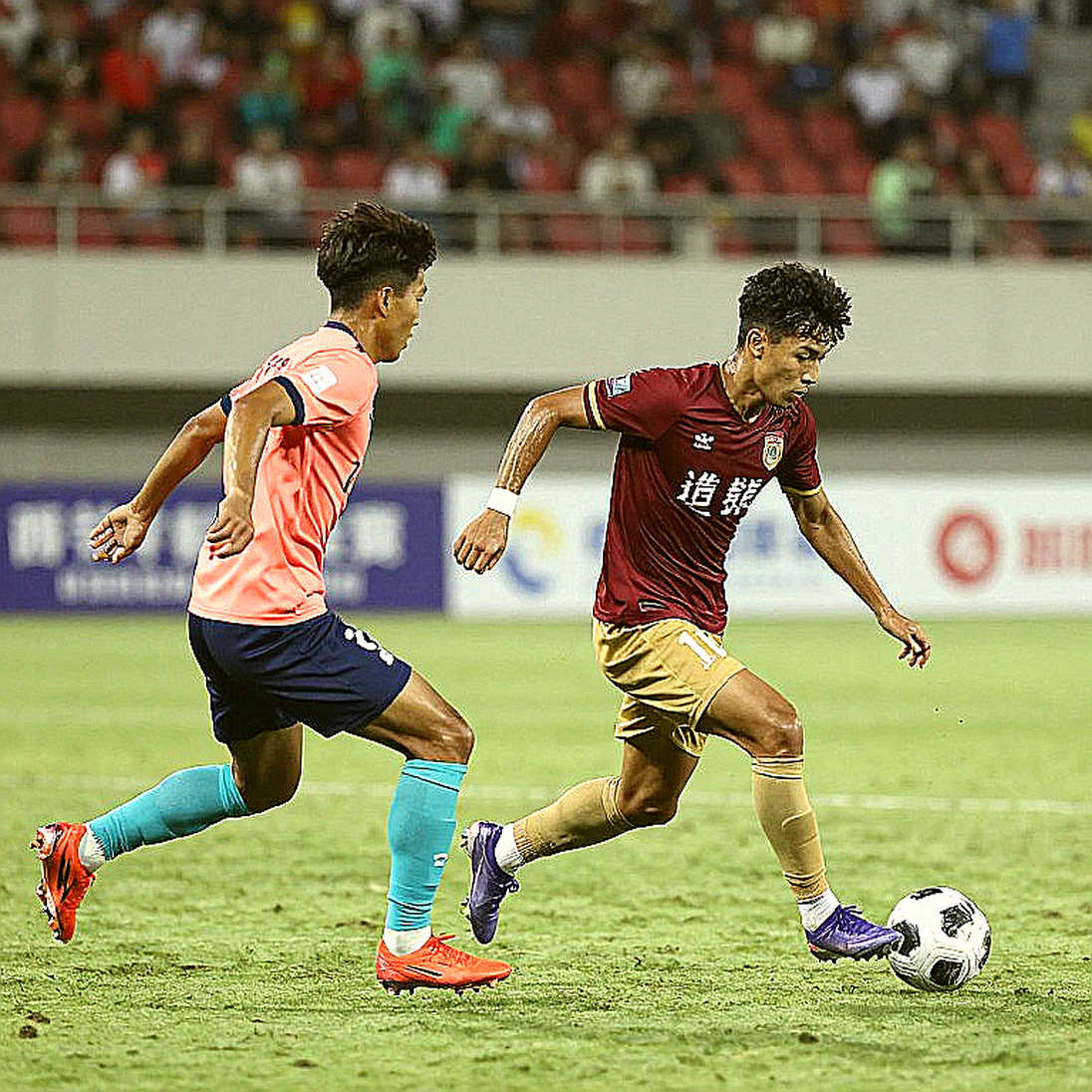
Based on my years of watching matches, a club that publicly emphasises centre-back pace is often describing a collective spacing problem as much as an individual recruitment need. The defensive line may be too deep for the desired pressing model, or the midfield may be unable to prevent the first forward pass. A fast defender can improve the margin for error, but he cannot repair the entire structure alone.
The right-back search is equally revealing. The report describes an ongoing search for a player who fits a determined profile. That could refer to injury cover, but no injury information is provided. It may also mean that the incumbent is considered unsuitable for the intended system. A modern right-back must defend wide areas, overlap, move inside during build-up and recover quickly after losing the ball. Fenerbahce may be looking for a player who can perform several of those tasks without forcing a tactical change.
The versatile winger-forward brief suggests a problem with in-game flexibility. Clubs seek this type of player when substitutions currently change the shape or reduce quality. A player who can move from the wing to the centre allows the coach to alter the attacking emphasis without replacing the entire structure. Versatility, however, is only valuable when the player is genuinely effective in both roles.
Reading Andre's profile
According to the report, Andre has made 54 senior appearances for Corinthians, scoring eight goals and providing two assists. That equals roughly 0.19 goal contributions per appearance. A per-90 calculation is impossible without his total minutes.
Those figures do not immediately identify him as a primary creator. They may, however, fit a deeper midfield role involving ball progression, second-ball recovery, duels and circulation under pressure. If Fenerbahce want him as part of a double pivot, the goal total is only one small part of the assessment. Progressive passes, pressure resistance, recoveries, duel success and the ability to receive behind the first line would matter more.
If the club expects Andre to replace its main creative midfielder, the available numbers provide weaker support for that interpretation. His exact role at Corinthians is essential. A player used as a deeper connector will naturally produce different attacking statistics from an advanced number eight.
Age adds another layer. A 20-year-old with 54 senior appearances may be a valuable development asset, but a mid-season move from Brazil to Turkey brings adaptation costs. The player must adjust to a new language, league rhythm, physical demands, travel schedule and tactical vocabulary. The most sensible integration plan would likely involve gradually increasing his responsibility rather than immediately assigning him the burden of a title race.
Andre therefore reads more like a midfielder who could transform balance than a ready-made attacking star. He may improve circulation and defensive coverage, but the available evidence does not show that his arrival would automatically increase Fenerbahce's creative output.
Four signings or four integration problems
Four new players can sound like a major upgrade. In January, the football cost of integration must be included in the calculation. A new centre-back has to learn the offside line. A right-back has to understand the winger's positioning. A midfielder must recognise pressing triggers and passing angles. A versatile forward has to know when to hold width and when to attack the central lane.
These relationships are rarely learned in one match. Winter recruits enter a schedule that may include league fixtures, cup matches and European competition. Training time is limited, and every mistake occurs under competitive pressure. One player may adapt quickly while the other three require several weeks. The club should therefore assess the window as a staged process rather than expecting four immediate starters.
The recruitment list looks more like a squad-balance operation than a search for one marquee name. That can be a sound strategy. A team that can change its attacking shape without losing structure will have more answers against different opponents. Yet each player must have a precise job. Position labels alone cannot guarantee tactical fit.
The financial story behind the rumours
No fee has been reported for Andre. A hypothetical market range of 6 to 15 million euros would be a modelled estimate, not a fact. Contract length, economic rights, sell-on clauses and competing bids would determine the real value. Any figure presented as confirmed without those details should be treated cautiously.
Fenerbahce's financial environment also requires attention to currency risk. Turkish clubs generate substantial revenue in Turkish lira, while wages, transfer fees and amortisation are often linked to euros. A 10 million euro signing on a five-year deal could represent approximately 2 million euros of annual amortisation before wages and bonuses are counted. A fall in the local currency increases the domestic cost of the same agreement.
Four arrivals also mean four salaries, four registration decisions and four long-term squad commitments. The Turkish foreign-player registration framework imposes limits, although the exact limit for the relevant season must be verified. If Fenerbahce are close to that limit, arrivals may require departures or the removal of players from the registered squad.
European financial controls matter as well. Payment in instalments does not erase the cost. Transfer fees are distributed across the contract period for accounting purposes, while wages remain part of the squad-cost calculation. The key figure is therefore not the number of arrivals but the net spend, the wage change and the number of exits.
The January plan should be read as squad restructuring rather than simple accumulation. Andre may represent an investment asset because of his age. The centre-back and right-back searches appear more directly tied to immediate performance. Those two types of spending should be evaluated separately.
Public expectations and accountability
Once four positions are publicly identified, expectations rise. If only two players arrive, the discussion will focus on the missing positions. Publicly naming positions also tells selling clubs where Fenerbahce feel vulnerable, which can weaken their negotiating position. Keeping names private protects negotiations but increases uncertainty among supporters.
The coach's position is tied to the plan. If the recruitment brief was prepared directly with Belözoğlu, the window becomes both a vote of confidence and an admission that the current squad is incomplete. If the club delivers the players and results fail to improve, attention will turn to how those recruits are used. If the club fails to deliver, the board will carry much of the blame.
The source provides no league position, points gap, recent form, expected-goals data or pressing numbers. That prevents a firm conclusion about whether the squad is underperforming or whether the recruitment is preparing for a title challenge. Still, a four-position plan signals that the existing group is not considered sufficient for the club's ambitions.
What remains unverified
The greatest weakness in the report is the absence of measurable performance information. We do not know how many chances Fenerbahce concede, how often opponents attack the space behind the defence or whether the current right-back is unavailable. The pace requirement may reflect a genuine structural issue, but it remains an informed hypothesis rather than a proven finding.
Andre's 54 appearances, eight goals and two assists also need context. Minutes, role, passing data, defensive actions and injury history would change the interpretation. A midfielder's goals cannot explain his value without knowing the tasks he performs.
The unnamed centre-back and right-back may be the most important parts of the plan. Andre's name may be available because he is the easiest target to identify, while negotiations for the defensive players remain confidential. Rumour volume does not equal evidence, especially when multiple reports repeat the same original claim.
The most useful verification points are an official club statement, confirmation from Corinthians, contract length, fee, registration information and the final squad list. Until those details appear, the responsible reading is a structural one: the club has identified a need, but the market has not yet proved that the solution exists.
The race ahead
Fenerbahce's January plan has tactical logic. A quicker centre-back could support a higher line, a defined right-back profile could improve defensive and attacking balance, Andre could strengthen midfield circulation, and a versatile forward could give the bench more options. Yet the success of the plan will depend on role clarity, timing and financial discipline more than on the number of names signed.
The club faces two tests. It must address four apparent needs while protecting its future wage and registration structure. If Andre arrives, he should be developed as part of a plan rather than presented as an instant star. If a faster centre-back arrives, the team's pressing distances must also improve; no defender can solve a broken structure alone.
Football is a language of intervals; the crowd only hears the nouns. The real match is shaped by the small gaps between a right-back's decision, a midfielder's turn and a centre-back's recovery run. Fenerbahce's January window will be judged by whether the four signings change those relationships, not merely by whether four players arrive. When the window closes, the sharper question will remain: has the club built a new structure, or has it found four new names for an old problem?